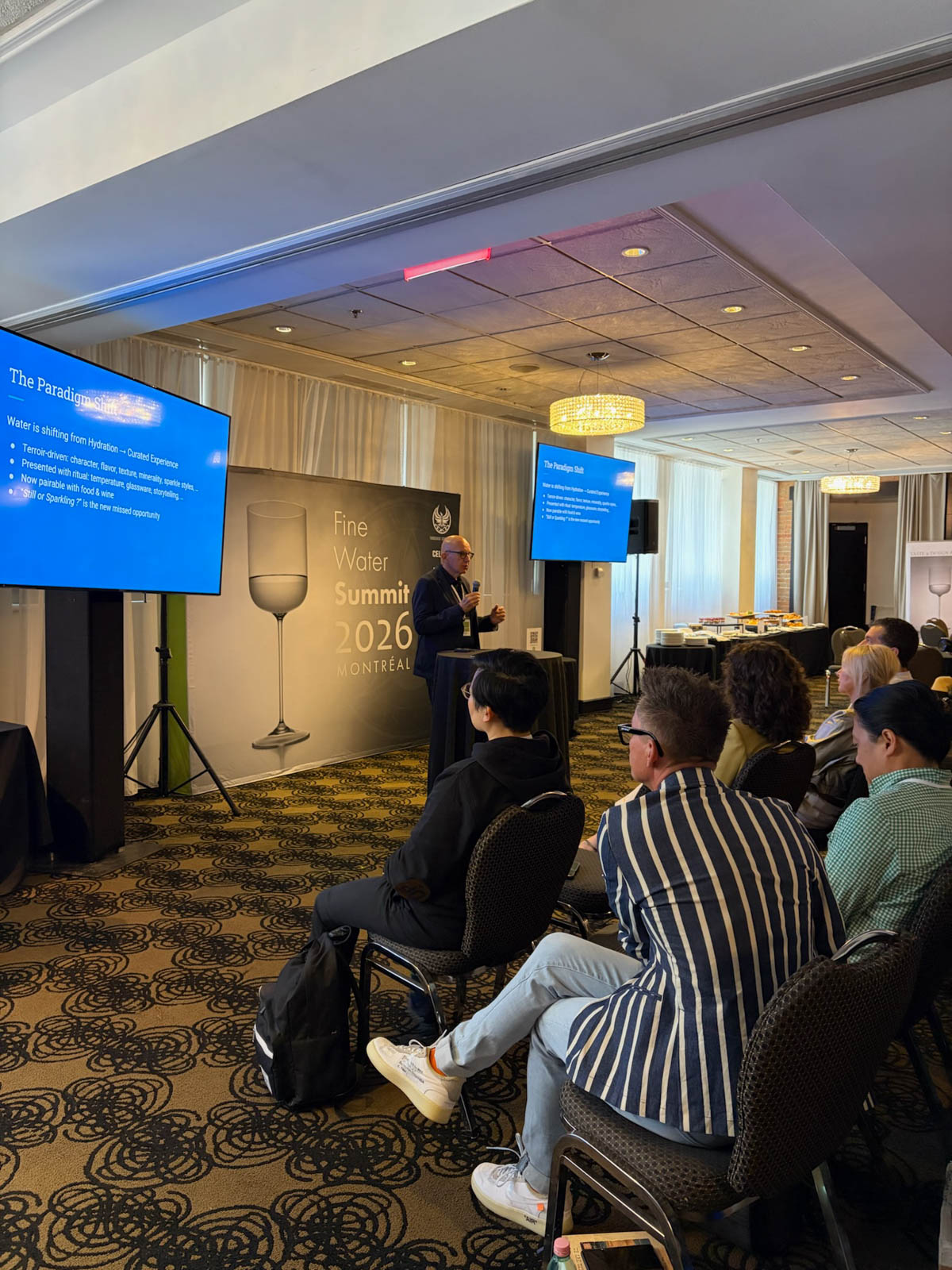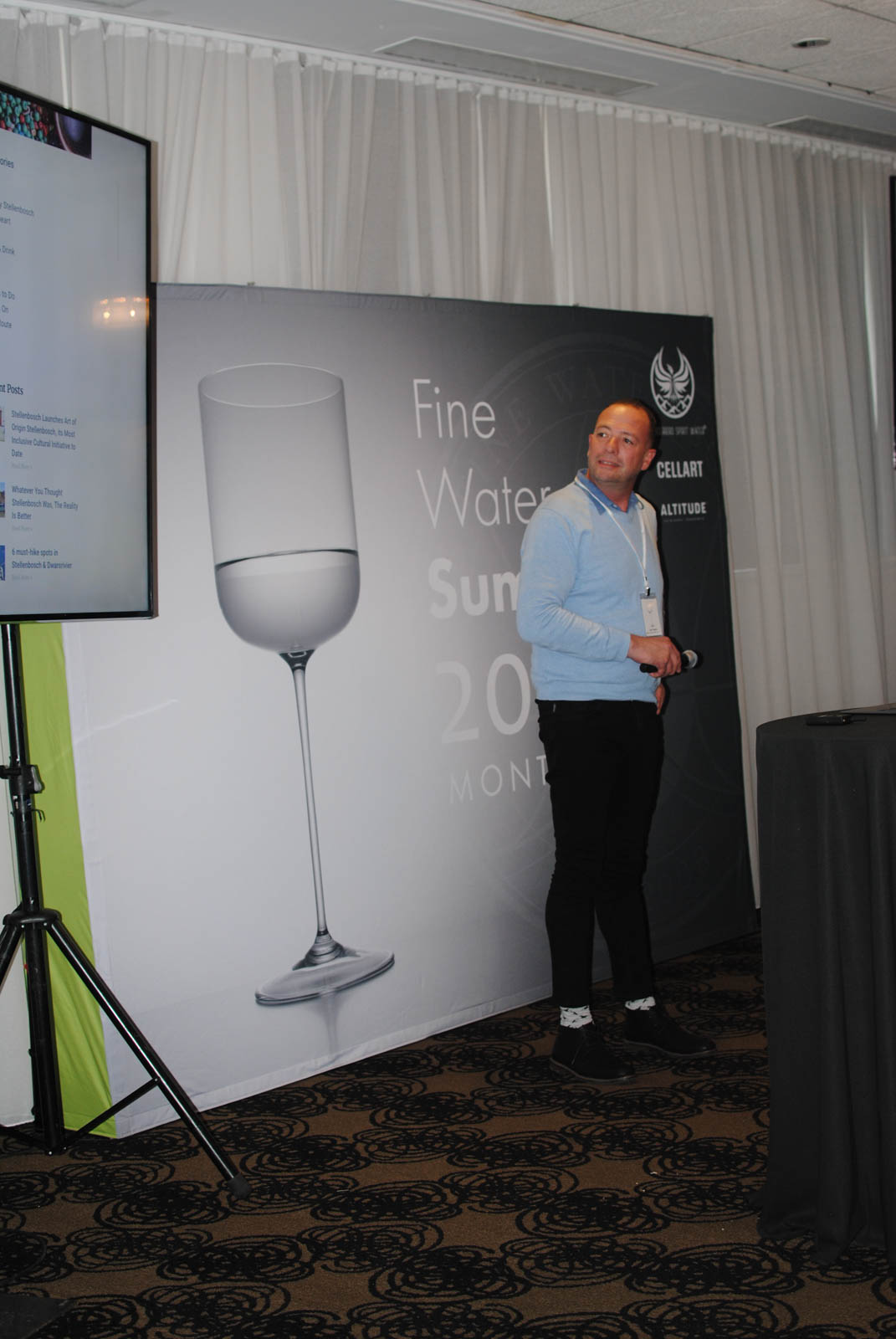
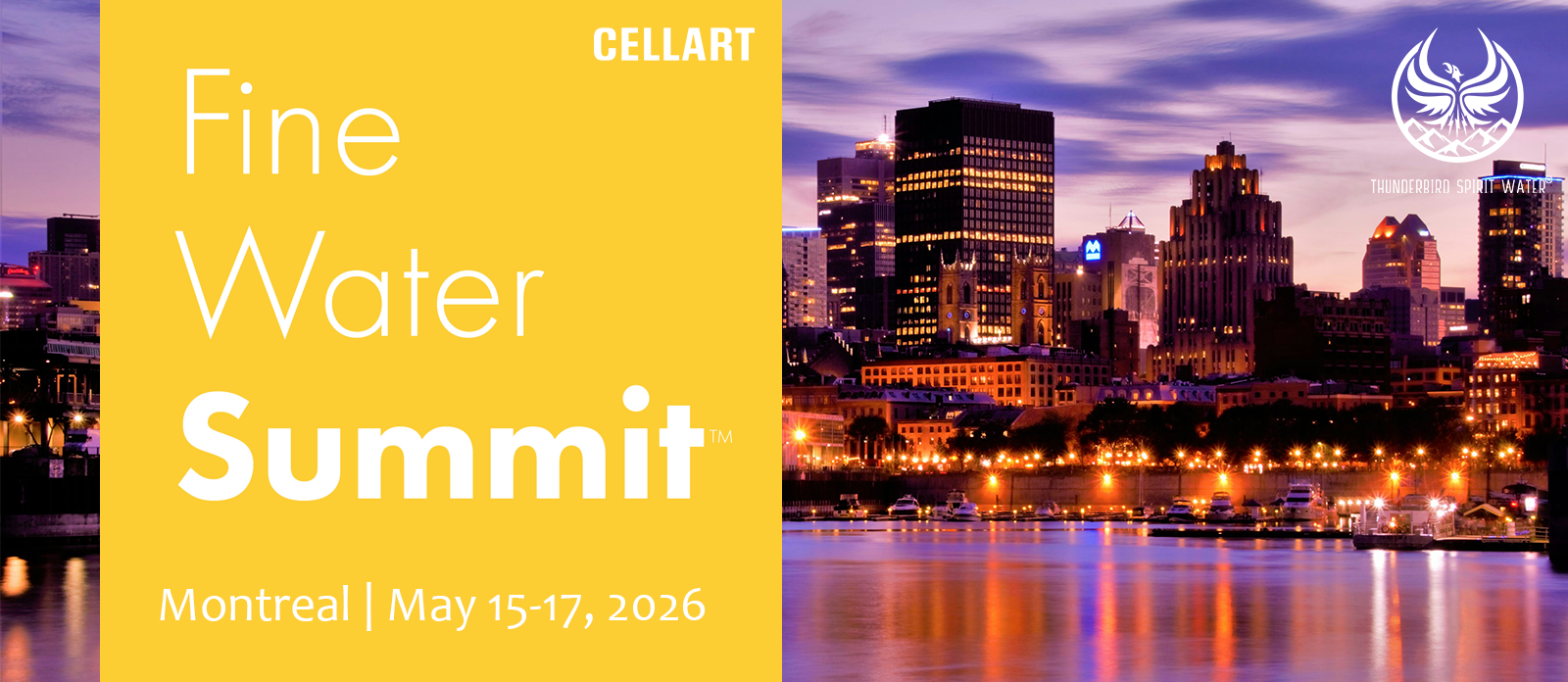
The Fine Water SUMMIT, in conjunction with the TASTE & DESIGN AWARDS 2026, was held in Montreal, Canada, May 15-17
The Future of Fine Water
Conference Summary by Nico Pieterse, Water Sommelier
As the 2026 Fine Water Summit in Montréal drew to a close, the prevailing feeling in the room was admiration—for what had been accomplished in just three days, and for what it signaled about the future of water culture.
What participants experienced was not simply a conference about water. It had been a glimpse into what fine water was becoming: a category defined by identity, craftsmanship, terroir, culture, hospitality, wellness, sustainability, and—more than ever—emotional connection.
The weekend opened on Friday morning with the Taste & Design Awards, a fitting beginning that underscored how far water had evolved beyond commodity status. By Friday evening, the Water Experience Dinner elevated that message even further. Surrounded by sommeliers, producers, innovators, and visionaries, guests tasted waters from around the world and witnessed a profound shift in real time: water had entered the realm of experience. It was no longer merely served—it was curated, paired, discussed, and felt.
Across Saturday and Sunday, the speakers collectively assembled a compelling picture of an emerging industry coming into focus.
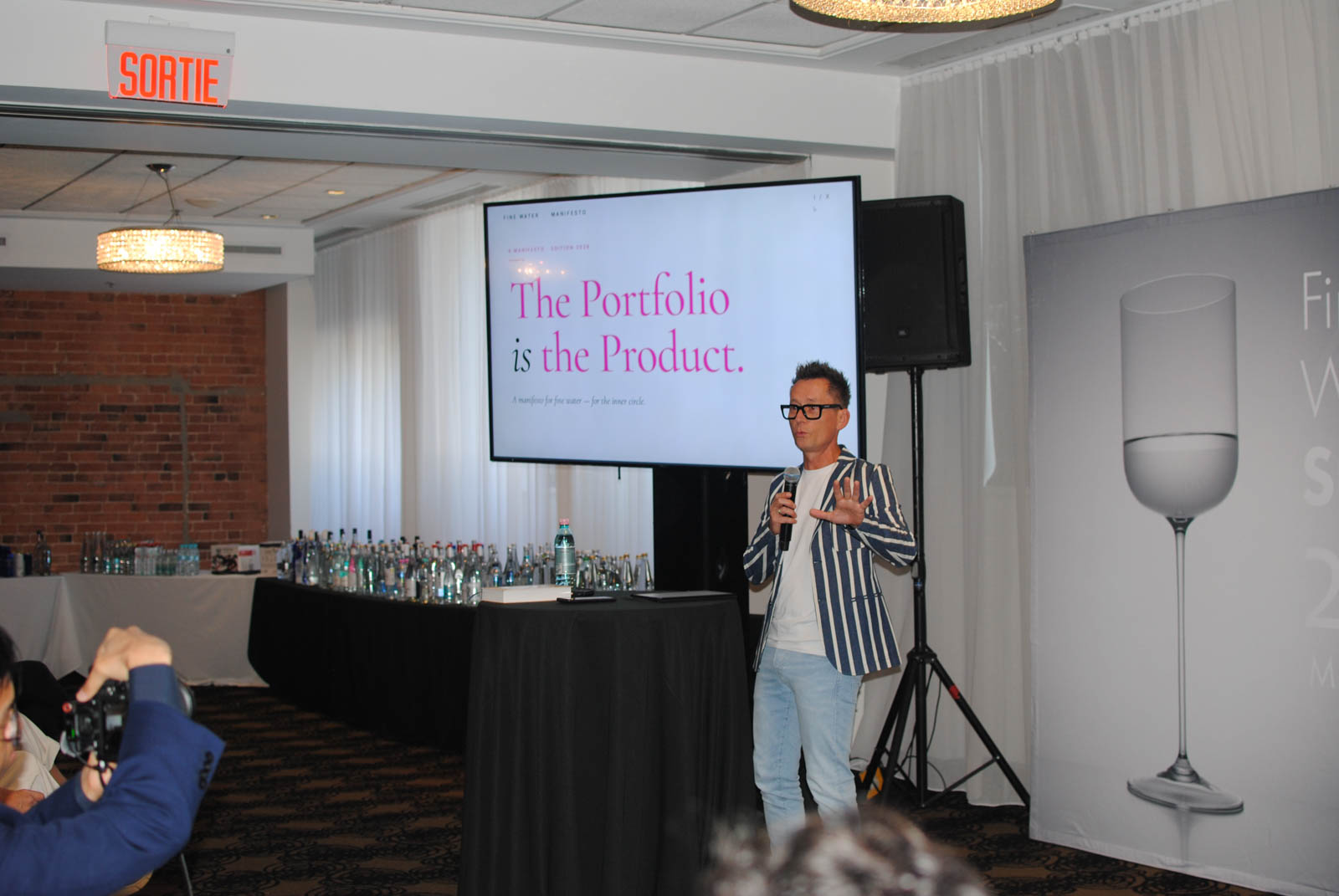
Pat Eckert had emphasized that in fine water, the portfolio itself became the product—where diversity, origin, storytelling, and curation carried as much importance as the liquid in the glass. Michael Mascha had challenged the audience to rethink accessibility and hospitality through “Fine Water as a Service,” demonstrating that the future would be shaped not only by premium products, but by premium experiences. Chameron Smith had shown how quickly the culinary world had embraced sophisticated water programs, even within Michelin-starred environments—where a water menu was no longer unusual and was steadily becoming expected.
Throughout the summit, a central truth kept resurfacing: water was not “just water.” Every source told a story. Every mineral composition created a distinct sensory experience. Every bottle represented geography, geology, climate, and time. And perhaps most importantly, water carried the power to reconnect people with what they consumed every single day—an everyday act that could become more intentional, informed, and meaningful.
Innovation emerged as one of the summit’s strongest themes. Tyson Brazell and Vincent Chou had brought the audience into the accelerating world of artificial intelligence, AGI, and the agentic revolution—fields that might initially have seemed distant from water, yet were clearly becoming intertwined with every industry. AI, it was argued, would shape hospitality, consumer behavior, logistics, personalization, membership ecosystems, and education.
Yet the most striking insight was the counterbalance: as technology accelerated, authenticity became even more valuable. And nothing embodied authenticity more purely than water. It could not be manufactured into truth. It came from the earth. It carried origin. It carried honesty.
The summit also made space for responsibility and stewardship—perspectives that grounded the conference in something deeper than trend or luxury. Chief Wilfred Cootes had reminded attendees that long before water became business, it had been sacred. Indigenous communities had understood for generations that people were not owners of water, but custodians of it. That message stood as one of the summit’s most enduring lessons: the future of fine water could not exist without protecting the future of water itself.
Other sessions expanded the lens even wider. Conversations around tokenization, terroir, and commodity—shared by Jean-Baptiste Denant—offered new frameworks for value and provenance. Jonathan Primeau and Thunderbird had contributed real-world case studies grounded in market reality. Leonela Nikollaj introduced Ester water as a new segment, while Cote Terre contributed to the crucial conversation around accessibility, sustainability, and emotional presentation—an approach that reframed water as both a human right and a meaningful experience.
Through all of these perspectives, one idea kept emerging with increasing clarity: the fine water industry remained in its infancy. And that was precisely what made the summit so exciting. Those gathered in Montréal were not merely participants in an industry—they were builders of a new category.
Sommeliers, restaurateurs, distributors, scientists, producers, designers, technologists, and storytellers had all played a role in shaping what the world’s relationship with water could become over the next decade—not only as a beverage, but as culture.
The conference also reflected a movement becoming unmistakably global. From Europe to Asia, North America to Africa, from luxury hospitality to wellness spaces, from Michelin-starred restaurants to educational tasting rooms—the conversation was growing. Consumers were becoming more curious. People wanted transparency, provenance, healthier relationships with what they drank, and increasingly, meaning. Fine water delivered all of that.
The atmosphere in Montréal was frequently noted as one of the weekend’s great successes. Organizers, speakers, sponsors, producers, hospitality teams, and attendees together created something truly special—an environment that felt both elevated and warmly collaborative. Particular appreciation was extended to Thunderbird Spirit Water for sponsoring the events and inviting everyone to “Refresh Your Spirit,” and to Cellart for local support and for continuing to challenge the ordinary within wine and water spaces.
Above all, the summit was powered by belief—belief in the category, and in the people shaping it. Every major movement began with a small group willing to see the future before everyone else did. And it seemed likely that years from now, gatherings like the 2026 Fine Water Summit would be remembered as pivotal moments in the evolution of water culture.
As the summit concluded, the message was clear: the future of fine water was not simply about luxury. It was about awareness, education, sustainability, experience, and human connection. Ultimately, it was about rediscovering value in something too often taken for granted.
Water was the most important substance on earth—and the greatest opportunity ahead was helping the world see it differently.