
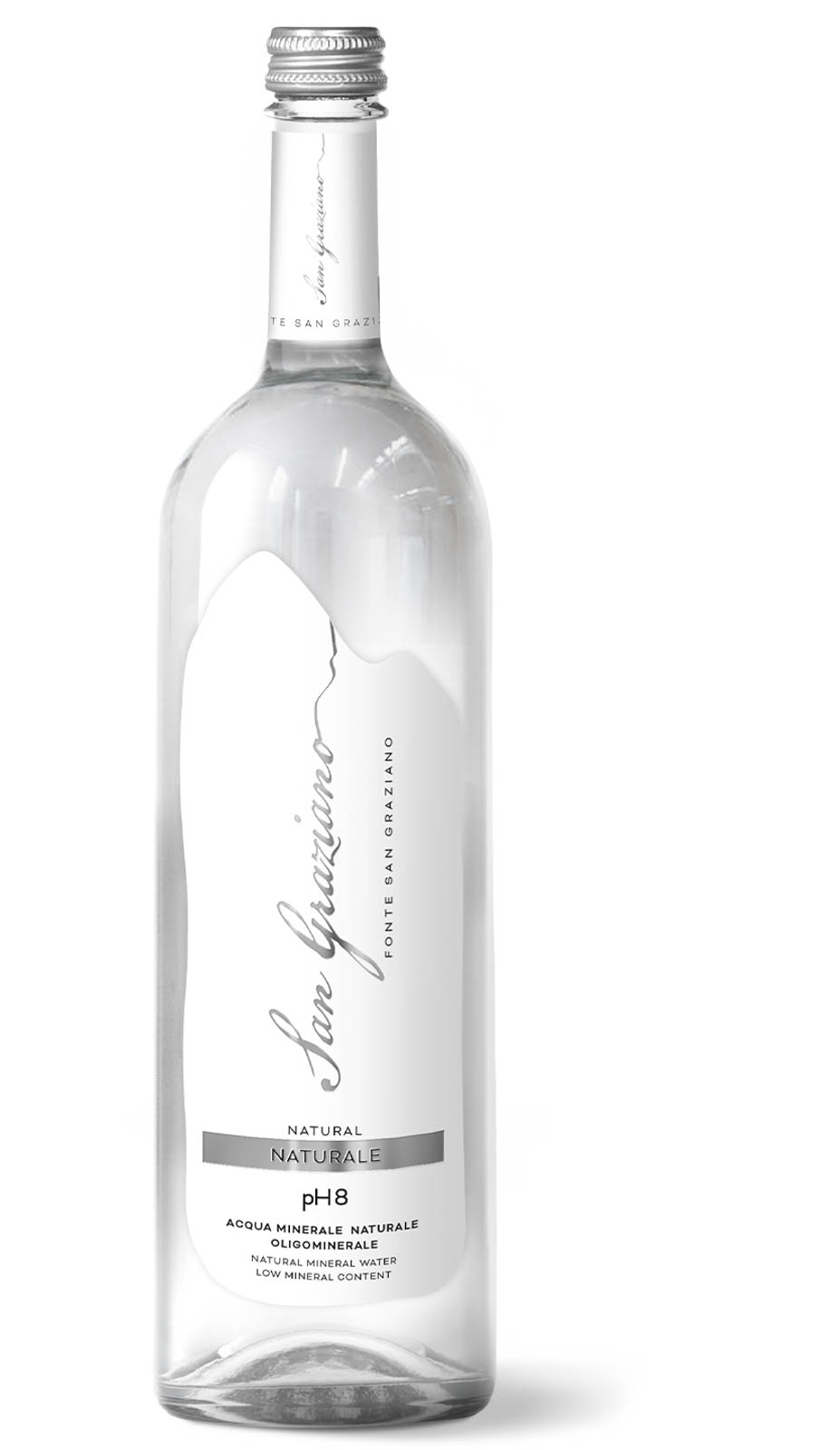
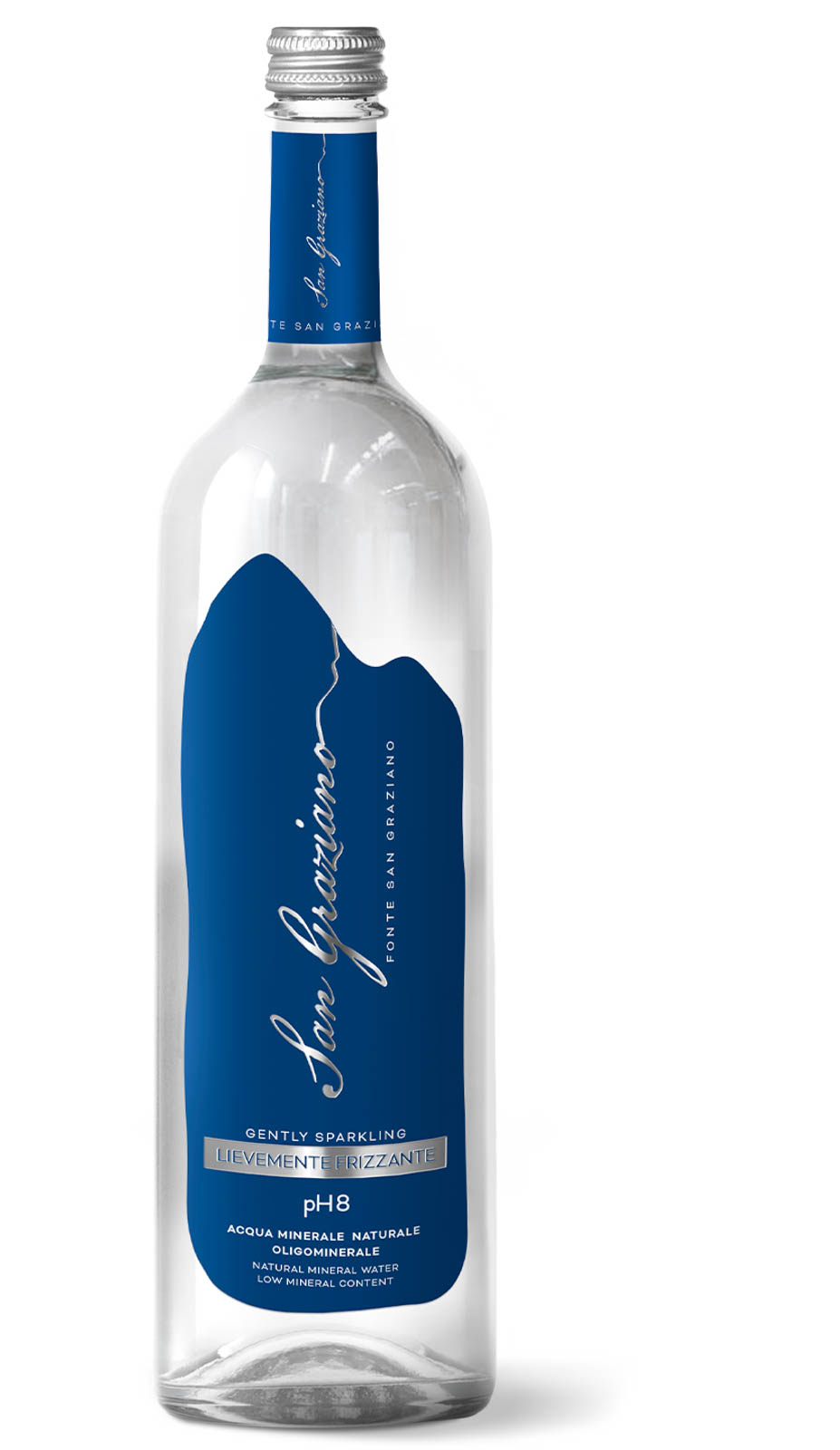
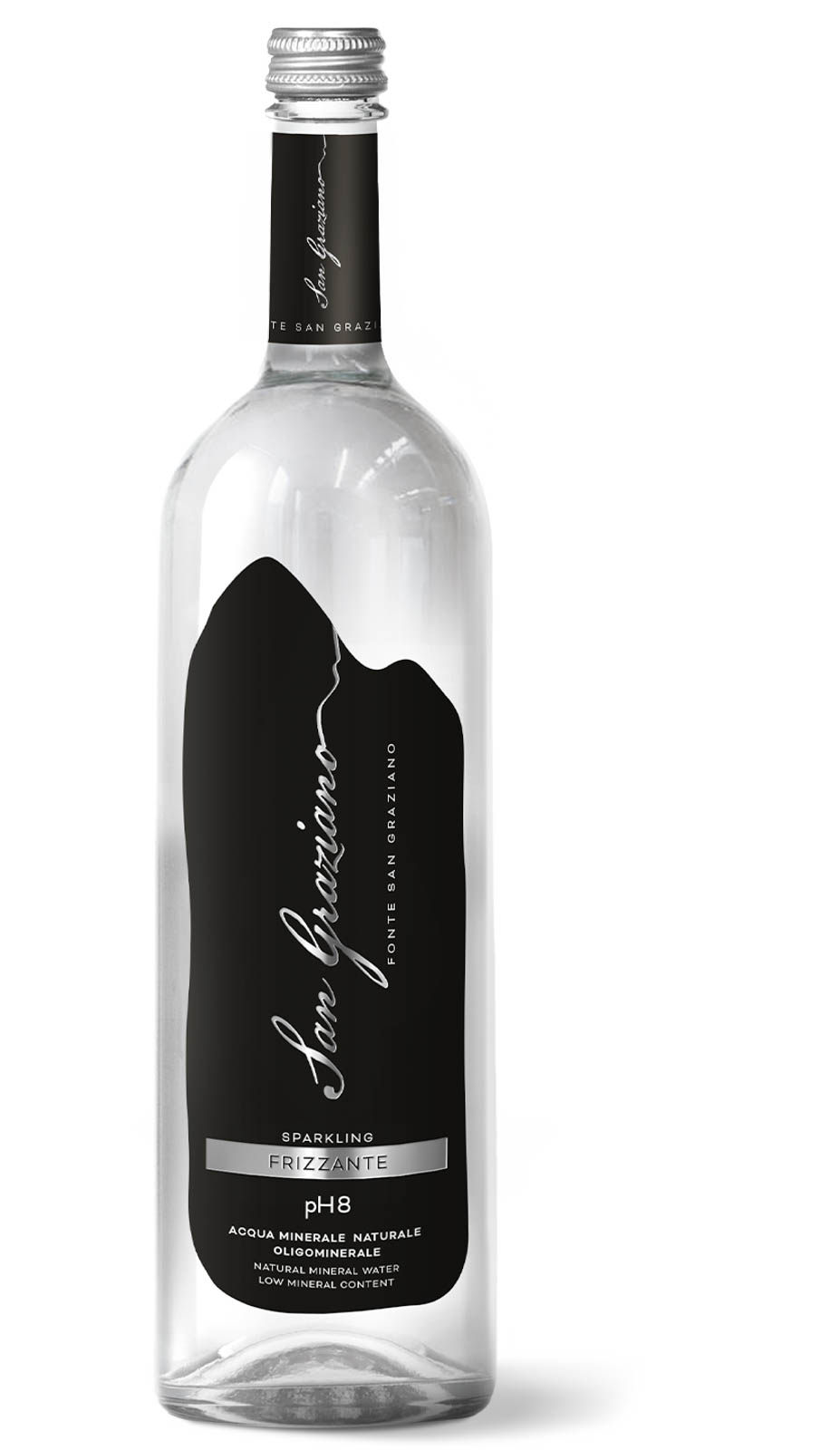
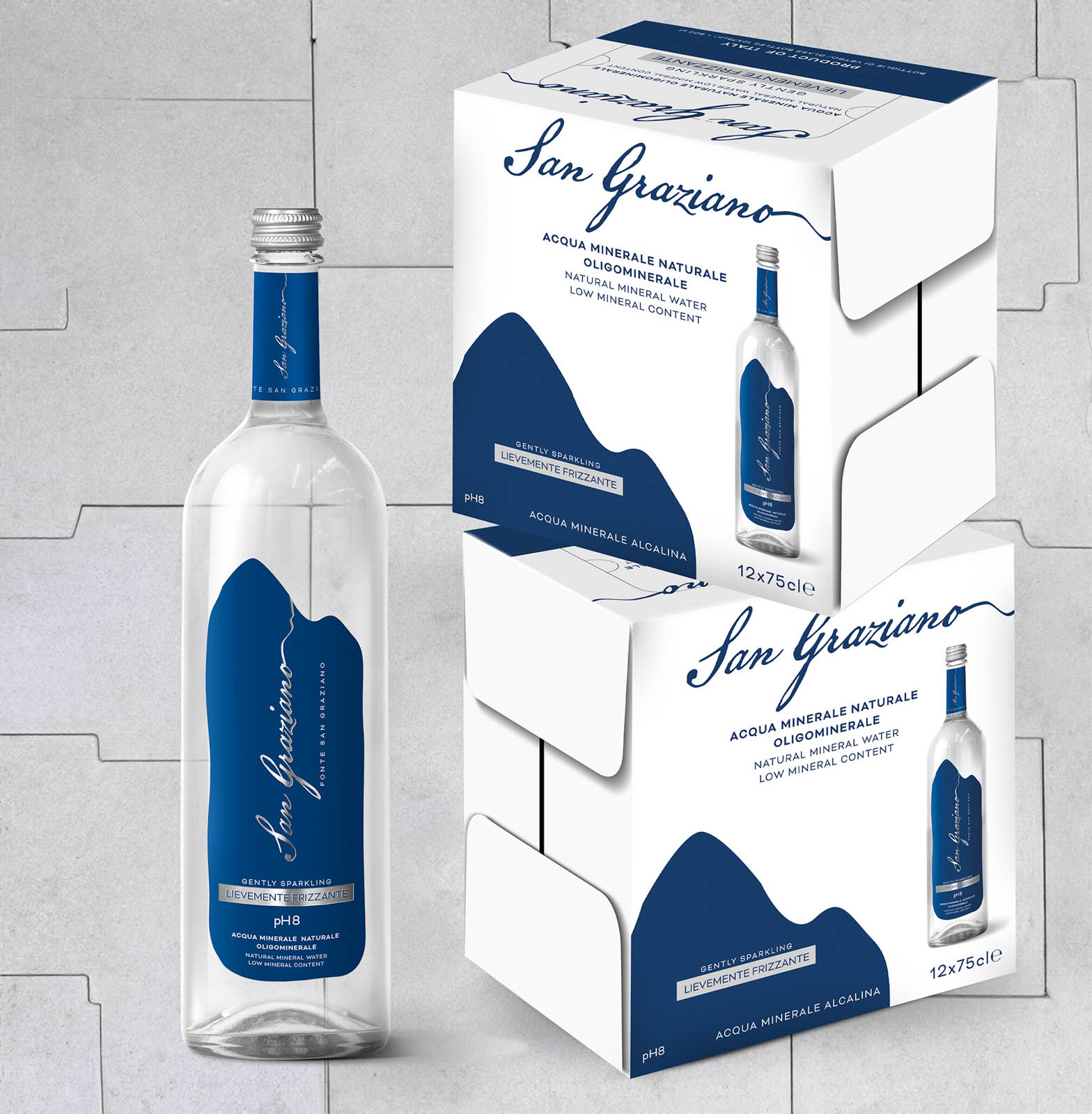
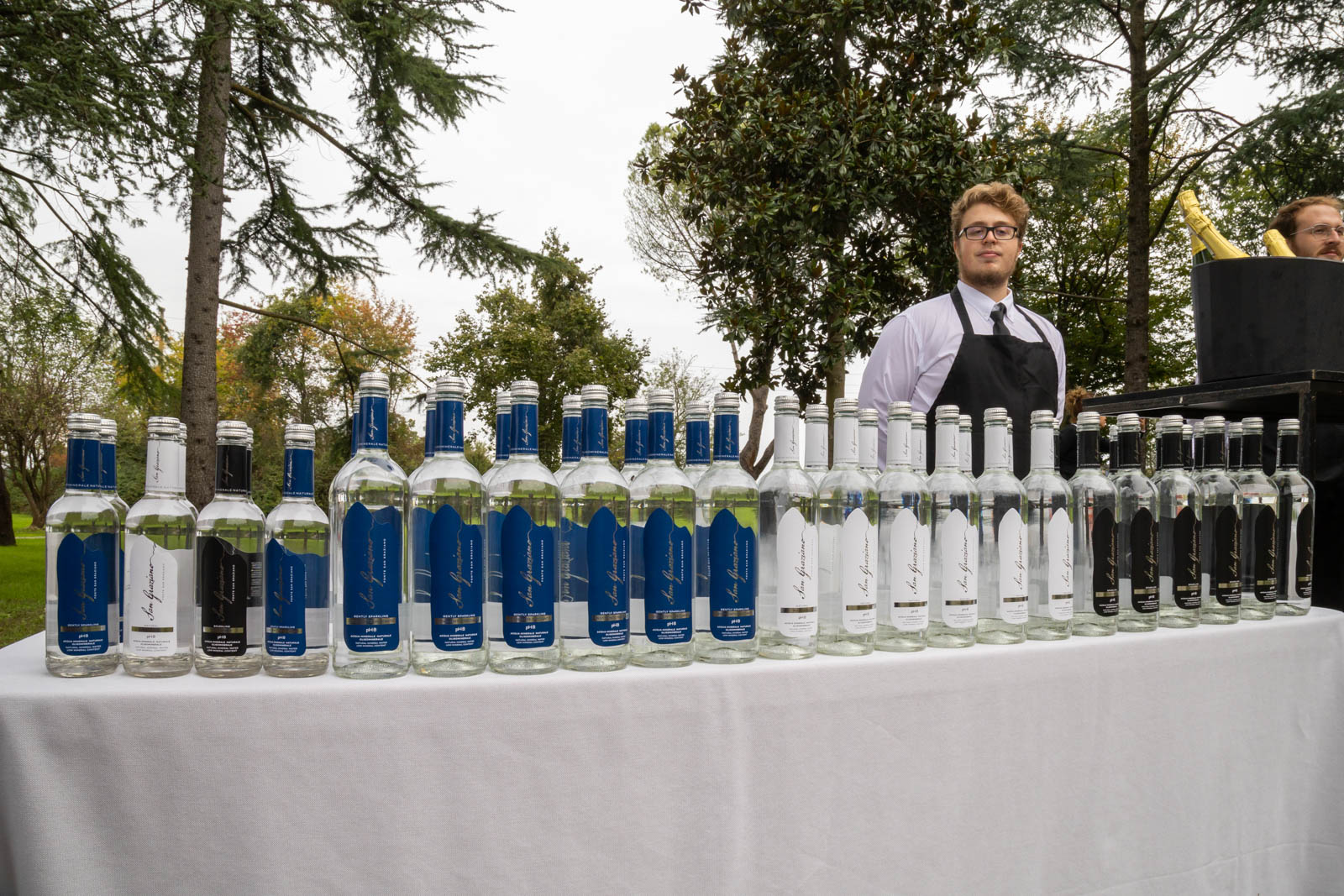
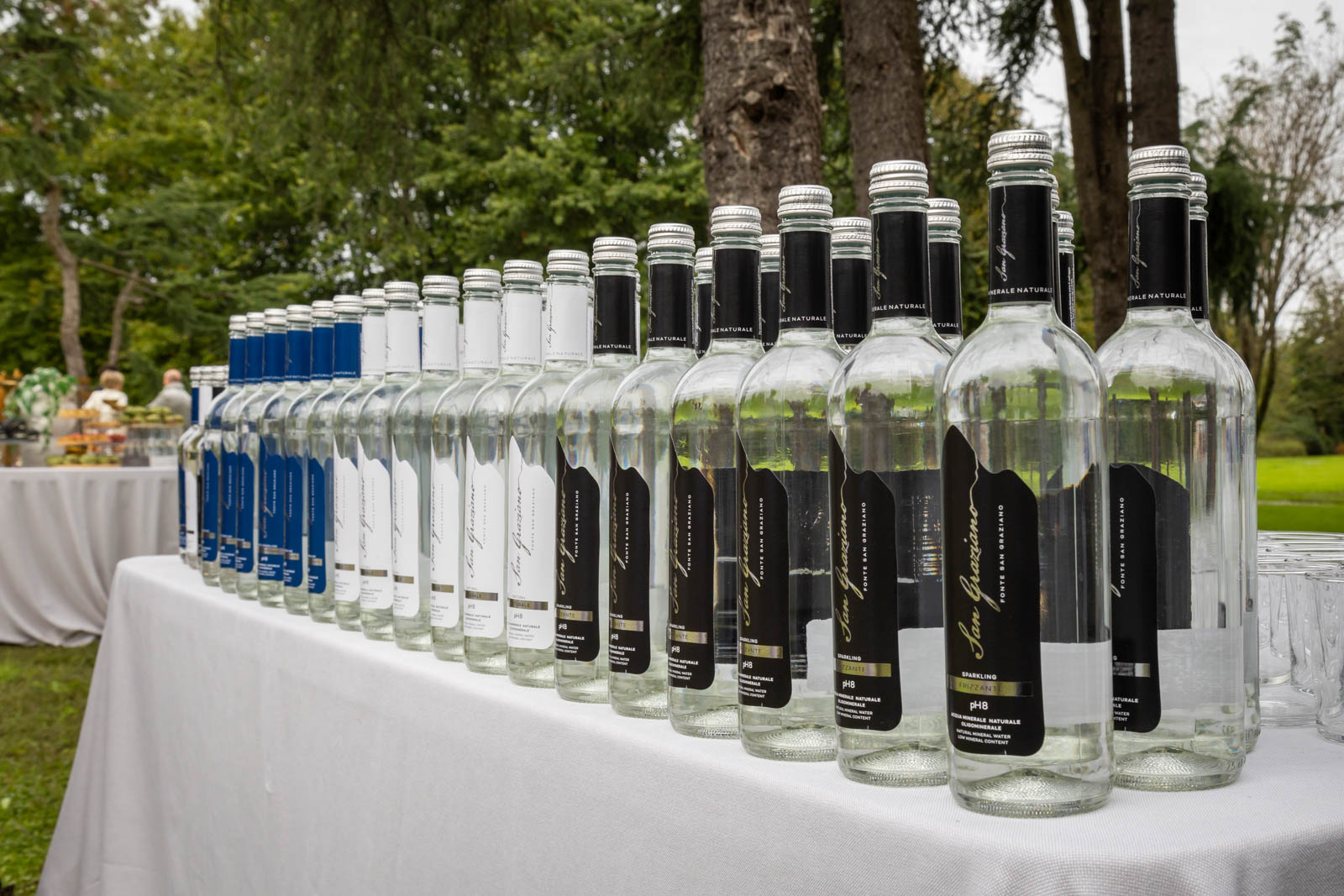
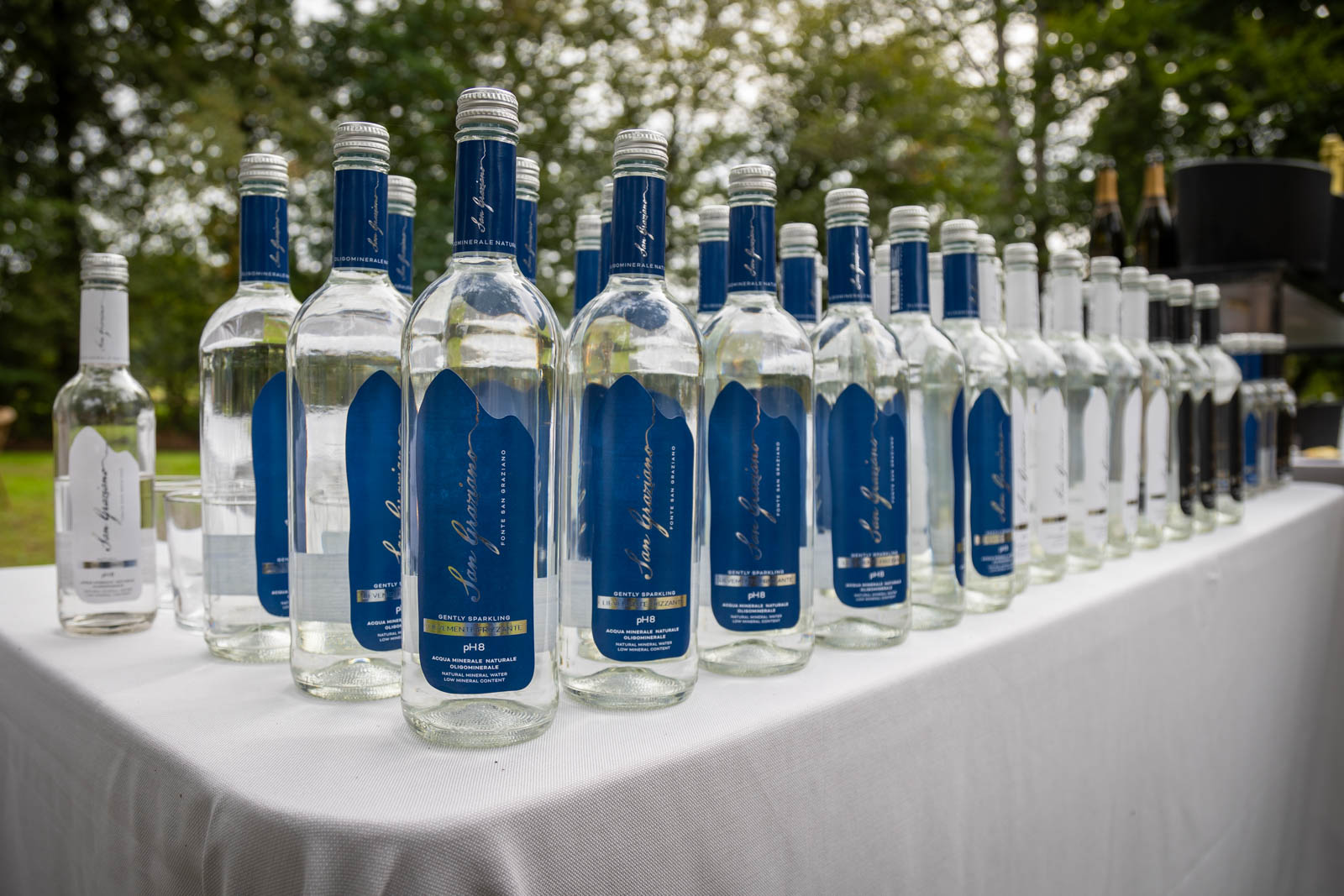
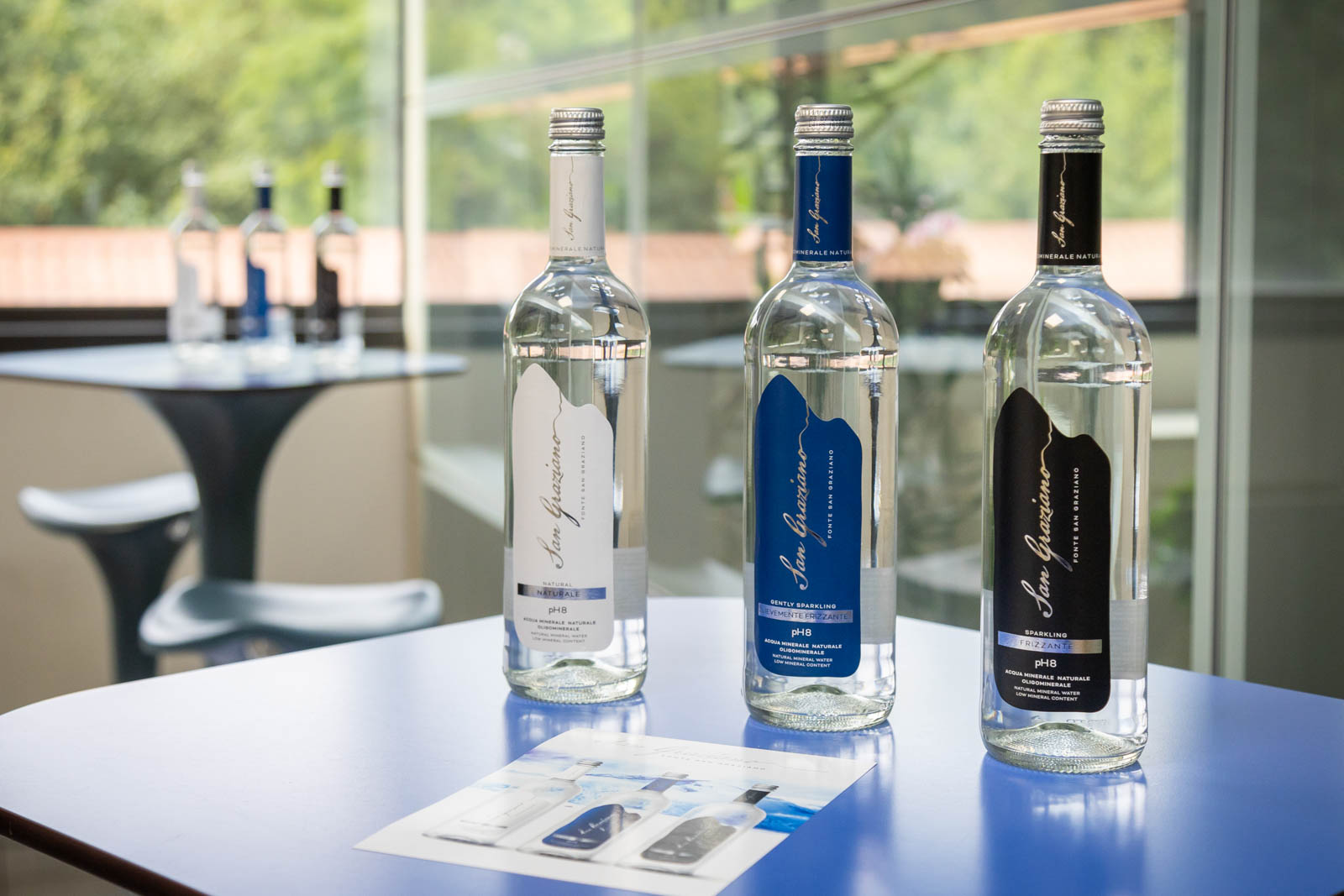
San Graziano Water Analysis:
| Balance | Still, Effervecent, Classic |
| Virginality | Very Good |
| Minerality | Low |
| Orientation | Alakline |
| Hardness | Very Hard |
| Vintage | 65 years |
| Carbonation | Added |
| TDS | 154 mg/l |
| ph factor | 8 |
| Hardness | 104 mg/l |
| Nitrate | 2.5 mg/l |
| Calcium | 28 mg/l |
| Magnesium | 9 mg/l |
| Sodium | 12 mg/l |
| Potassium | 1 mg/l |
| Silica | 14 mg/l |
| Bicarbonate | 151 mg/l |
| Sulfate | 3 mg/l |
| Chloride | 3 mg/l |

San Graziano is a Member of the Fine Water Society |
|
| Source: | Artesian |
| Location: |  |
| Country of Origin: | Italy |
| Region: | Lombardy |
| Place: | Lake Como , Mariano Comense |
| Established: | 2024 |
| Company: | San Graziano |
| Status: | Active |
| Web Site: | sangraziano.it |
| phone: | +39 (0 ) 31 745282 |
| email: | |
| Social Media: |  |
San Graziano’s story is written into the Alpine geology above Lake Como, where precipitation falling at elevations over 1,000 meters becomes the system’s recharge. Hydrogeological fieldwork and isotopic analysis identify these high-altitude inputs and place the origin well away from surface influence. From there, the water moves slowly downward into a deep, confined structure.
The aquifer reflects a landscape shaped during the Quaternary glaciations: thick deposits of gravels and sands interbedded with older conglomerates, separated by compact clay layers that act as natural barriers. A calcium-montmorillonite-rich formation - valued for adsorption and ion-exchange capacity - adds a further protective layer, helping isolate the deeper groundwater from shallower circulation. Dating studies indicate a residence time of roughly 65 years, a period long enough for gradual interaction with Alpine carbonate and silicate rocks and for a stable hydrochemical balance to emerge.
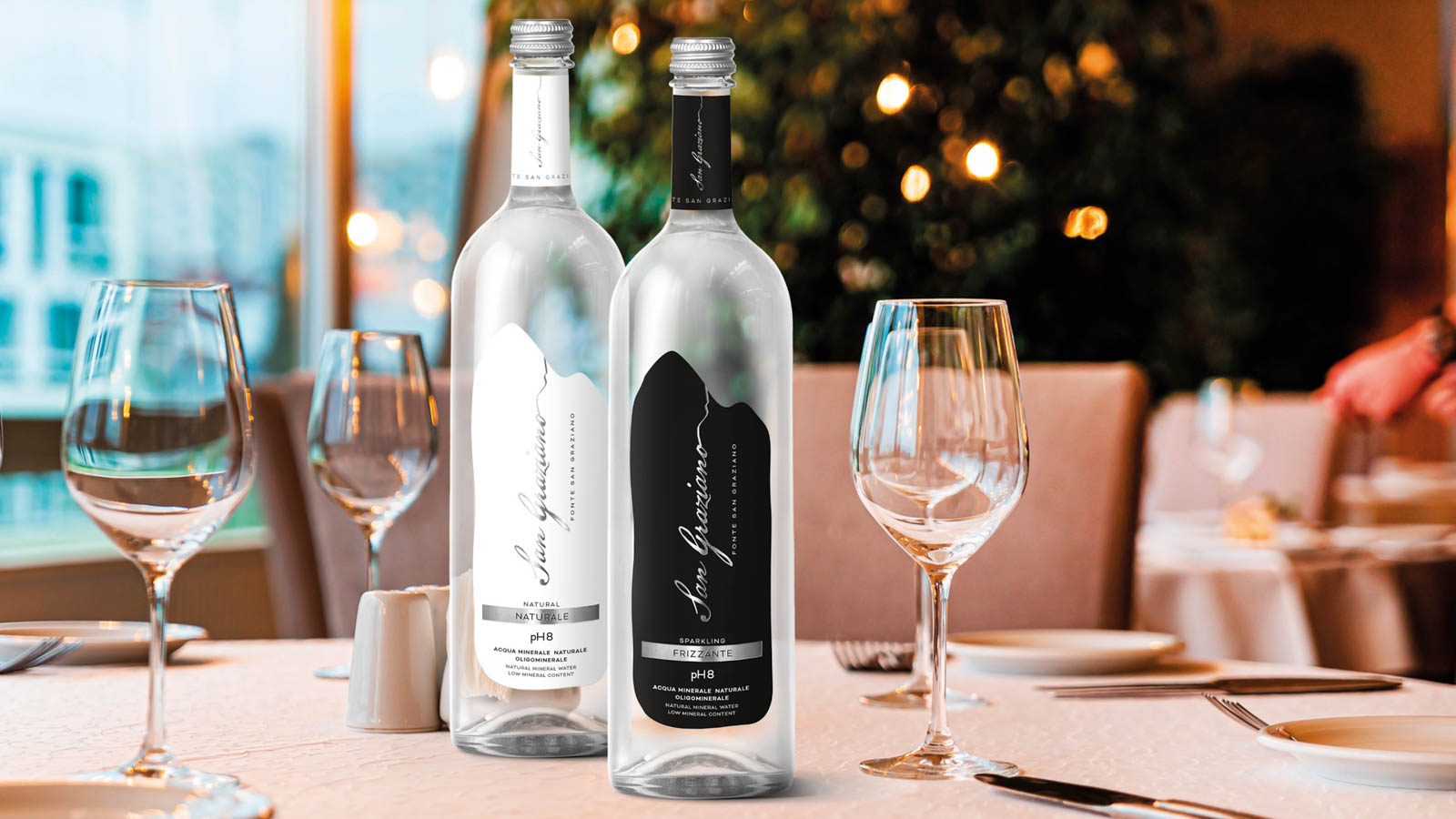
In the glass, the result sits within the bicarbonate–calcium family, with minerality measured and a consistent profile: TDS 154 mg/L and a naturally alkaline pH of 8.0. Bicarbonate shapes a rounded, clean palate; calcium and magnesium lend structure without weight, while sodium and sulfate remain restrained, avoiding salinity or astringency. Silica contributes a faintly velvety texture, and the finish stays precise rather than forceful. With its low mineral load and alkaline tilt, the water works at the table as a quiet palate reset—suited to raw seafood, delicate shellfish, and refined preparations such as risotto, and steady enough not to intrude alongside mature whites, structured reds, or aged cheeses.
Awards
- Best Sparkling mineral water 2026 Berkeley Springs International Water Tasting
- 5th place natural mineral water 2026 Berkeley Springs International Water Tasting